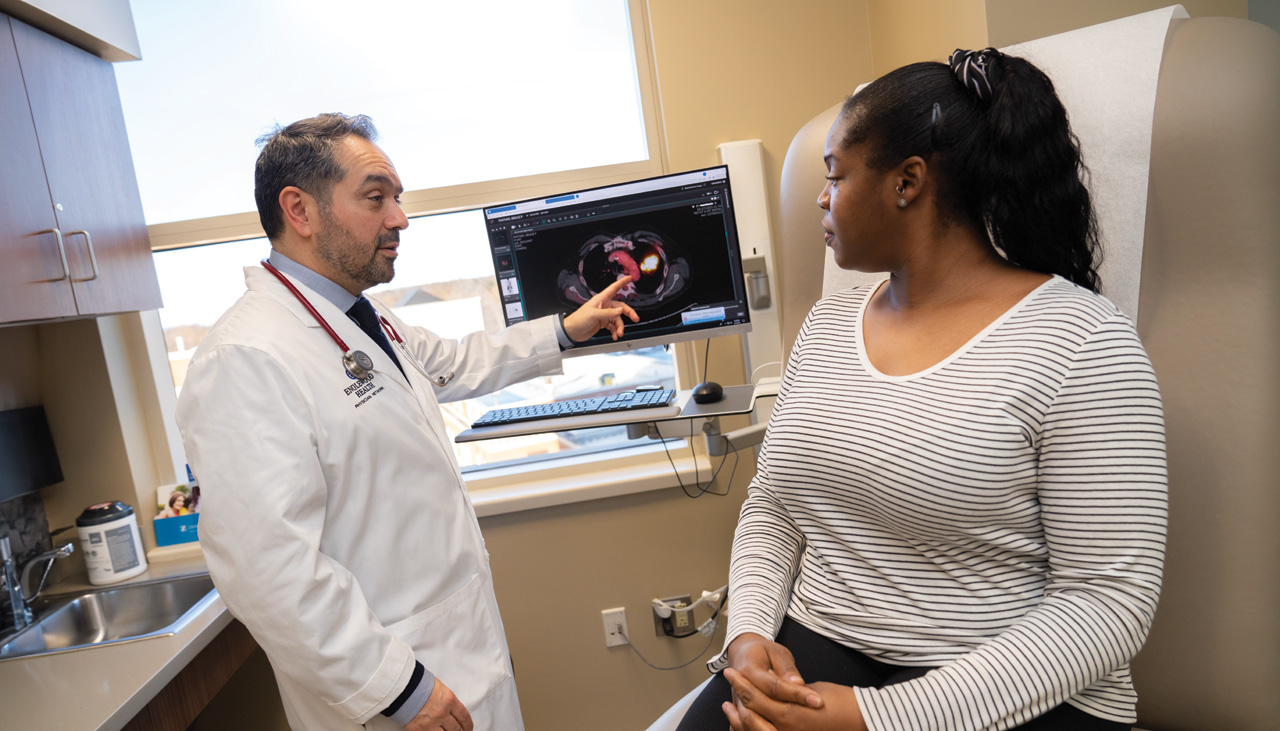
Lung Cancer Screening
Lung cancer is the leading cause of cancer-related deaths in the United States, but finding it early can improve treatment options and outcomes. At Englewood Health, our Lung Cancer Screening Program provides annual testing for the early detection of lung cancer and ensures eligible patients receive the right follow-up care.
Appointments and Program Information
First Screening
Call 201-894-3640 to schedule a 15-minute virtual visit with the Lung Cancer Screening Program. During the visit, a nurse practitioner will review your eligibility and answer any questions. If you are eligible, your low-dose CT scan will be scheduled for a date, time, and location that work well for you. Testing is available in Englewood, Emerson, Fair Lawn, Jersey City, and Woodland Park.
Our team may also contact you directly if our records indicate that you may be eligible. If you receive a text or MyChart message notifying you of your eligibility, simply follow the instructions to schedule your visit.
Follow-up Screenings
Once you are enrolled in the program, you will be eligible for annual screenings as long as you continue to meet the eligibility criteria. Our team will help you stay on track with your recommended screening schedule, including arranging for the order and scheduling the appointment.
As the nurse practitioner for the Lung Cancer Screening Program, I help patients understand their results, navigate recommended next steps, and connect with the appropriate providers. My goal is to ensure that patients feel informed, supported, and empowered rather than overwhelmed in trying to navigate the healthcare system on their own. I continue to monitor and support patients throughout their care journey.
-
Emily Bakerman, MS, RN, APN-C

Frequently Asked Questions About Lung Cancer Screening
What is a low-dose CT scan?
Low-dose CT (LDCT) lung cancer screening is a quick, painless test that produces detailed images of the lungs. It provides physicians with a more detailed view of the lungs than a conventional chest X-ray.
LDCT can help detect lung cancer early, before symptoms appear and when treatment may be more effective. It can also identify lung nodules that may need to be monitored over time.
LDCT uses less radiation than a standard chest CT scan.
Should I get a LDCT test for lung cancer?
Finding lung cancer early, before it has spread to other parts of the body, is the best way to improve the chances of successful treatment and survival. Like colonoscopy for colorectal cancer or mammography for breast cancer, LDCT is an effective screening tool that has been shown to reduce lung cancer deaths. The landmark National Lung Screening Trial found that LDCT screening reduced lung cancer deaths by 20% among people at high risk.
As with all screening tests, LDCT has limitations. It may miss a cancer or detect it too late to improve the chances of survival. Screening may also reveal abnormalities that require additional testing, including more invasive procedures such as a biopsy, to determine whether cancer is present.
Am I eligible for lung cancer screening?
You are eligible if you meet all of the following criteria:
- Are 50–80 years old
- Are a current or former smoker
- Have no signs or symptoms of lung cancer and no cancer diagnosis within the past five years
- Have at least a 20-pack-year smoking history (a pack-year is the number of packs smoked per day multiplied by the number of years smoked)
You must have a prescription for the screening from a healthcare provider following a consultation, known as a “shared decision-making visit.” Schedule a virtual visit to get started.
Medicare and most third-party payers cover screening for eligible patients.
How do I prepare for my LDCT? What is the test like?
Getting a low-dose CT (LDCT) lung screening is quick and easy. No fasting, IV, or special preparation is needed. During the scan, you’ll lie on your back on a table that moves gently through the center of a large, open, doughnut-shaped scanner, which takes detailed pictures of your lungs. The entire visit in the scanning room takes about 15 minutes, and the scan itself takes less than three minutes.
What happens once I get my LDCT screening results?
If your scan shows no concerning findings, you’ll return for your next screening in one year. Our team will contact you when it’s time to schedule your next appointment.
If your scan shows something that needs a closer look, our nurse practitioner will help you understand your results, guide you through next steps such as additional testing or treatment, and connect you with the right providers. Depending on what further testing shows, you may return to routine screening or move on to specialty care such as thoracic surgery, interventional pulmonology, or medical oncology.
Diagnosing and Staging Lung Cancer
If lung cancer is suspected, your doctor may recommend several diagnostic tests, including a chest X-ray, CT scan, MRI, or PET scan. These tests may also be used to see how much your cancer has grown or spread—a process called staging, which helps guide your treatment. Further testing may include:
- Blood samples: Done to detect tumor markers or tumor DNA released into the bloodstream.
- Sputum cytology: Used to analyze mucus coughed up from the lungs to see if it contains cancer cells.
- Tissue biopsy: Collection of a sample of lung tissue for microscopic examination to check for the presence of cancer cells.
- EBUS (endobronchial ultrasound): Performed to sample lymph nodes around your affected lung for further analysis, via a scope inserted into your bronchus that is guided by ultrasound.
- Molecular testing: We test your tumor for its genetic features so we can match you with targeted therapies or clinical trials of novel medications.
- Robot-assisted bronchoscopy: This advanced technology enables our doctors to perform minimally invasive biopsies in distant areas of the lungs that were previously unreachable using traditional methods.
- Navigational bronchoscopy: Our doctors use GPS technology to direct the video-bronchoscope to small tumors in the outer reaches of the lungs for biopsy.
- Thoracentesis: The collection of fluid from around the lungs using a long, thin needle for examination.